Director Murali Kanth had a well-paying job in the US at a reputed MNC. Yet, his soul pined for storytelling. Having read a wide-range of writers/novelists, he knew he wanted to tell a substantial, rooted story whose characters are real.
Dhandoraa, his debutant movie, weds social drama with a caste oppression text. To be released in theatres on December 25, the film is set in a village where even the graveyard is not spared from social hierarchies. In this interview, Murali Kanth throws light on the Christmas release. "The brilliance of films like Thithi (Kannada, 2015) and Ee.Ma.Yau (Malayalam, 2018), which center on the theme of death, further cemented my resolve. Their success demonstrated that powerful, high-quality cinema can be created within this thematic space, strengthening my decision to pursue a similar narrative," he says.
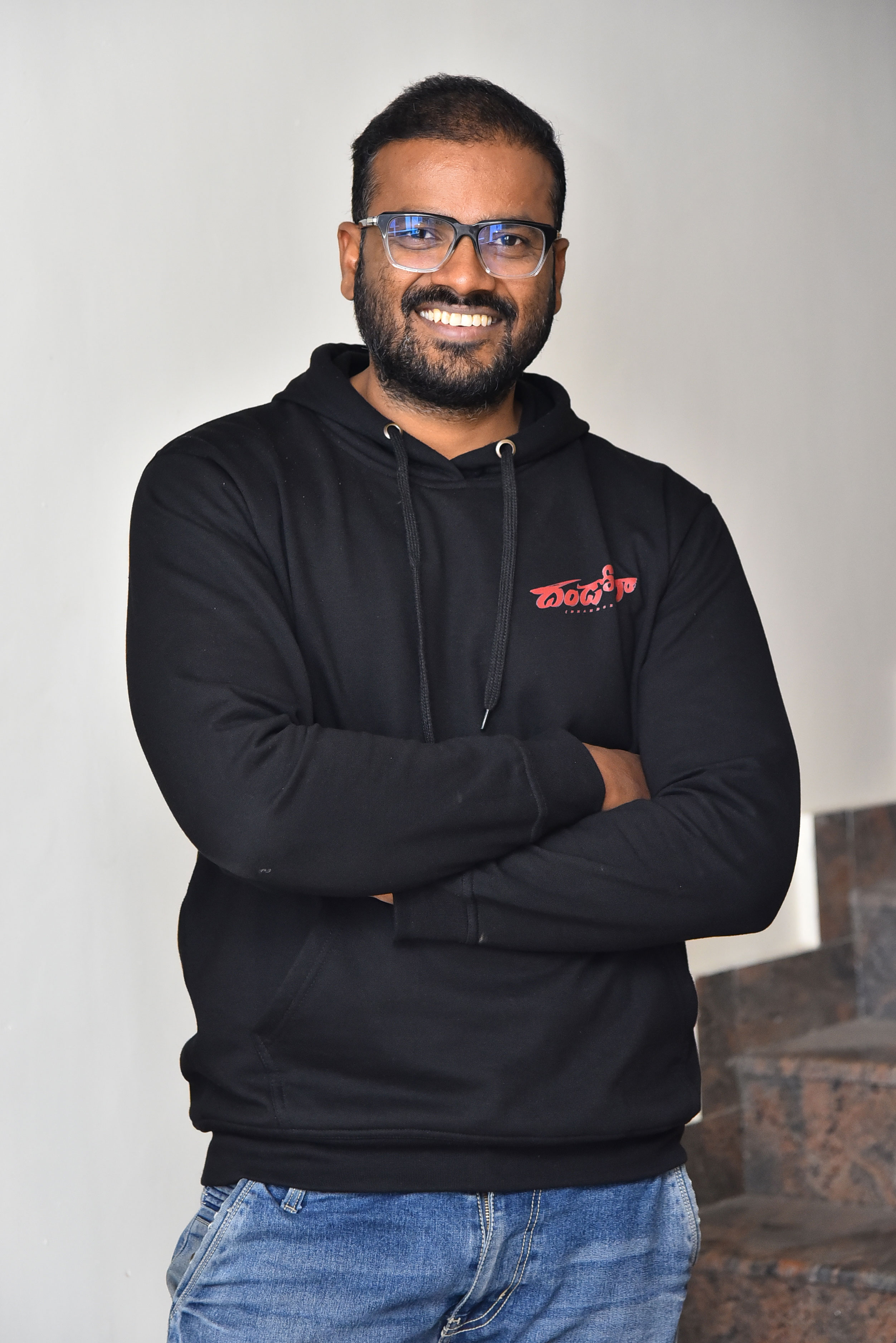 Before stepping into the world of filmmaking, I did attend workshops on filmmaking while in the US. I was raised in Medak. After moving to the US, I slowly realized that cinema was my calling. It's only after I learned something about filmmaking that my confidence went up. I faced rejections after writing the story of Dhandoraa. I realized that most producers have their own set of preferences (biases) based on which they judge a story. I was moved by Colour Photo and therefore knocked on the doors of Loukya Entertainments. Ravindra Banerjee was particular about not compromising on scale and quality. He convinced me not to settle for moderate-scale mounting. Since I became a director bypassing the usual hierarchy, I was overwhelmed to find 100-200 people on set. That was just in the initial days. In the very first schedule, I shot for 18 days at a stretch. The producer's confidence in me grew after that.
I gravitated towards concepts that feel grounded and authentic because I was not that enthused by the idea of debuting with a romantic story, a high-octane thriller, or an actioner. The writings of novelists as different as Yandamoori Veerendranath and thinkers like K Bala Gopal opened my eyes to unfamiliar worlds. Contrary to what many might assume, Dhandoraa is not an anthology movie.
It is because of my extensive reading that I chose to narrate naturalistic storytelling. Why not return to my Telangana origins and narrate a story that illuminates a part of the world largely unseen by the public, is the question I asked myself.
Just because the narrative of Dhandoraa deals with a serious topic, it's not about things that happened only in the past. To this day, segregation is a reality in rural India. My film deals with the challenges around the cremation of a dead person. The themes dealt with by Balagam were entirely different. That film was about funereal rituals (and the processing of death). Dhandoraa comes with what happens until the conclusion of final rites. While Anthima Yatra would have been an apt title, our producer insisted that we have to go with something powerful-sounding. Mark K Robin's background score will be among the most promising features of Dhandoraa.
While Dhandoraa feels strongly about caste-based discrimination and its continued prevalence in villages, it doesn't do grandstanding in terms of offering a "solution". There exist government schemes to end caste-based segregation in the arena of graveyards, but these schemes don't work on ground. Laws and rules can't do much unless social attitudes undergo a shift.
Each character is integral to the narrative, although the story itself essentially revolves around Sivaji's character. In fact, you will find quite a few strong female characters in Dhandoraa. Their decisions and moves drive the story forward. Bindu Madhavi's character, for example, will particularly be among the strongest ones. My inclination to pen substantial female characters stems from the influence of strong-willed women in my own life.